
Running a Sex Offender Check in Iberia Parish
Start with the Louisiana State Sex Offender and Child Predator Registry, select Iberia as the parish, and compare name and location results. No separate verified IPSO public list was documented, but the sheriff or responsible municipal police department performs local registration duties and can verify a concern. NSOPW adds participating jurisdictions beyond Louisiana.
Gather the correct spelling, aliases if known, and a city, ZIP, or address. Search by both identity and geography because a move or parish boundary can change which result set appears. LSP warns that its information depends on courts, Corrections, and local agencies and does not guarantee completeness, accuracy, or timeliness.
Accept Louisiana Registry Conditions
The Louisiana State Police registry gateway requires a user to scroll through the conditions and choose “I AGREE.” “I DO NOT AGREE” blocks entry.
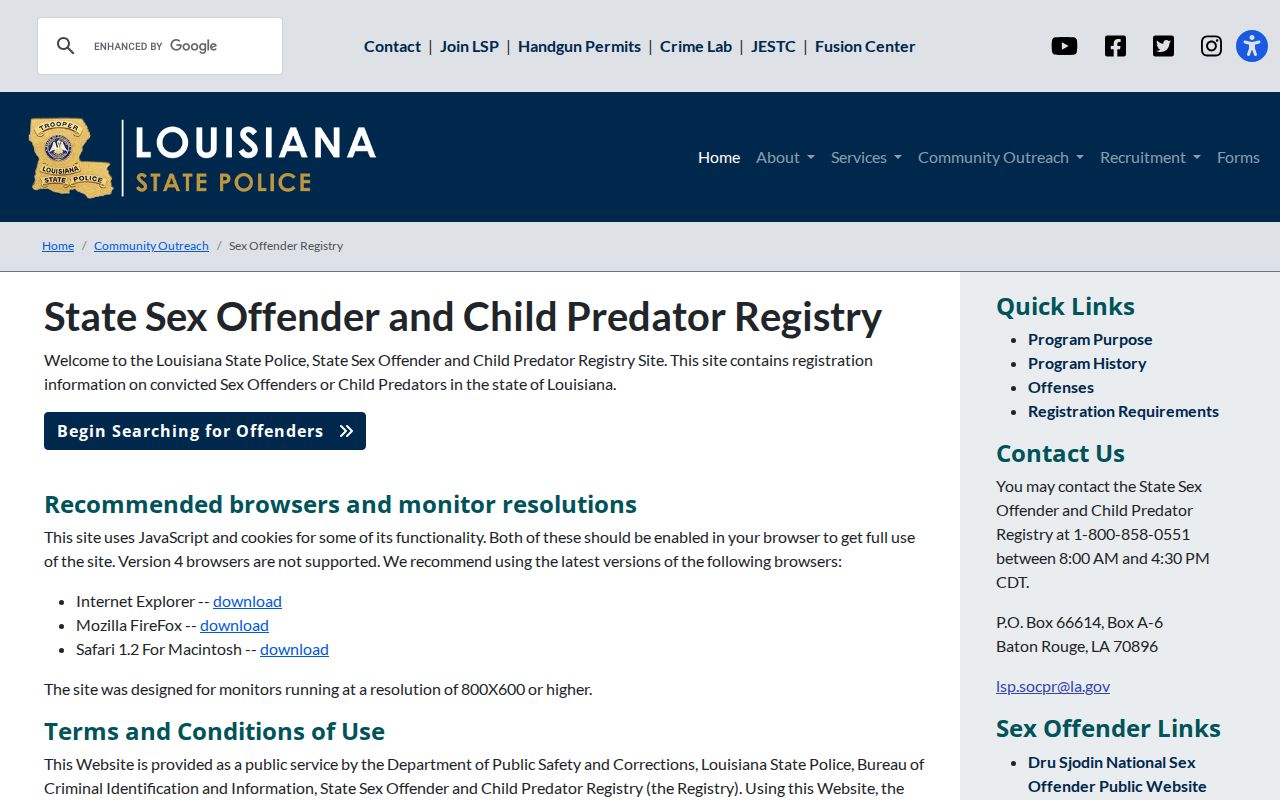
The conditions are part of the search process, not boilerplate to skip: they explain the data sources, limits, and consequences of misuse.
The portal reports the physical whereabouts or location information supplied for qualifying convicted registrants. It depends on reports from courts, Louisiana Corrections, sheriffs, and police chiefs. That chain makes the registry useful for current awareness but also explains why a court judgment and a public profile answer different questions. Read the official status and verification fields rather than inferring facts that the profile does not state.
Searching the Louisiana Offender Registry
Louisiana State Police BCII manages the state portal for convicted sex offenders, sexually violent predators, and child predators who qualify under state law. Parish filtering makes Iberia results easier to review, while name and address searches help account for nearby jurisdiction lines.
- Open the LSP registry, read the conditions of use, and select “I AGREE.”
- Enter a first and last name, or use an address, city, ZIP, parish, or available radius control; choose Iberia for a parish filter.
- Review map or list results and compare the full identifying fields rather than relying on name alone.
- Open the official profile, read status and verification details, then call the Registry or local law enforcement if information appears outdated.
| Field Label | Type | Required | Notes |
|---|---|---|---|
| Conditions acceptance | Buttons | Yes | I AGREE opens access; I DO NOT AGREE denies it. |
| Last / first name | Text | Search-dependent | Spelling and aliases matter. |
| Address / city / ZIP | Text | Search-dependent | Supports geographic searching. |
| Parish | Dropdown | No | Select Iberia for parish filtering. |
| Radius / map | Map control | No | Use live options; exact distances may change. |
Louisiana Plus NSOPW
A Louisiana search is best for state detail, but people can move across state lines. The Dru Sjodin National Sex Offender Public Website provides a single search across participating jurisdictions.
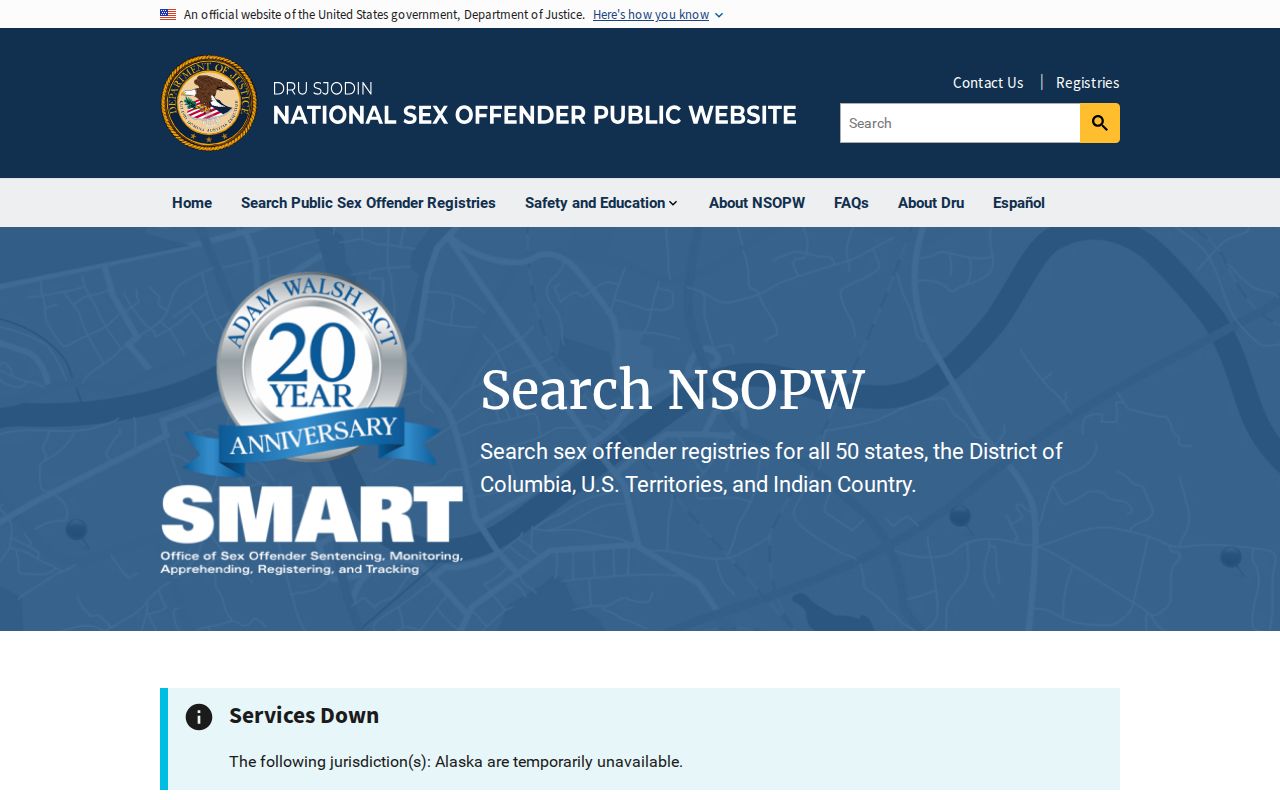
Use NSOPW as a cross-state discovery layer, then open the originating jurisdiction's official profile and verify local Iberia information through LSP or the registering agency.
A no-result from one geographic filter is not conclusive. Repeat the search with aliases, nearby ZIP codes, and locations across a parish or state boundary. When two profiles look similar, compare the official photograph, physical description, conviction jurisdiction, and reported addresses before deciding whether they concern the same person.
NSOPW is most helpful when an Iberia search suggests a prior location elsewhere or when the relevant address lies near a state line. It collects public registry results from participating jurisdictions but does not replace their underlying legal definitions. Follow a national result back to the responsible state, territory, tribal, or local registry for its current profile, contact method, and correction process.
What a Registry Profile Shows
A public profile is built to identify the registrant, show reported locations and qualifying offense information, and describe registration status. Exact fields depend on the legal duty; the registry is not a complete criminal case file.
Vehicle or other registration information may appear when required and reported. A profile does not publish every underlying court document, investigative fact, or protected detail. For the conviction record itself, use the proper court custodian; for current registration accuracy, use LSP and local law enforcement.
| Name & Aliases | Reported identifying names used to distinguish records. |
|---|---|
| Photo & Physical Description | Photograph, age or DOB, sex, race, height, weight, hair, eyes, and marks where reported. |
| Registered Address | Reported residence and other locations required by law. |
| Offense & Statute | Qualifying offense, conviction jurisdiction and date, statute, and sentence where displayed. |
| Level / Tier | Louisiana tier and associated registration duration. |
| Registration Status | Compliance or status information and verification dates; confirm suspected errors. |
Iberia's Three-Day Reporting Chain
R.S. 15:545 directs sheriffs and police chiefs to fingerprint covered registrants and forward registration information, criminal history, and offense-law text to BCII within three business days. Registration occurs with local law enforcement where the person resides and in other jurisdictions required by law.
The official local registry-duty law is captured below.
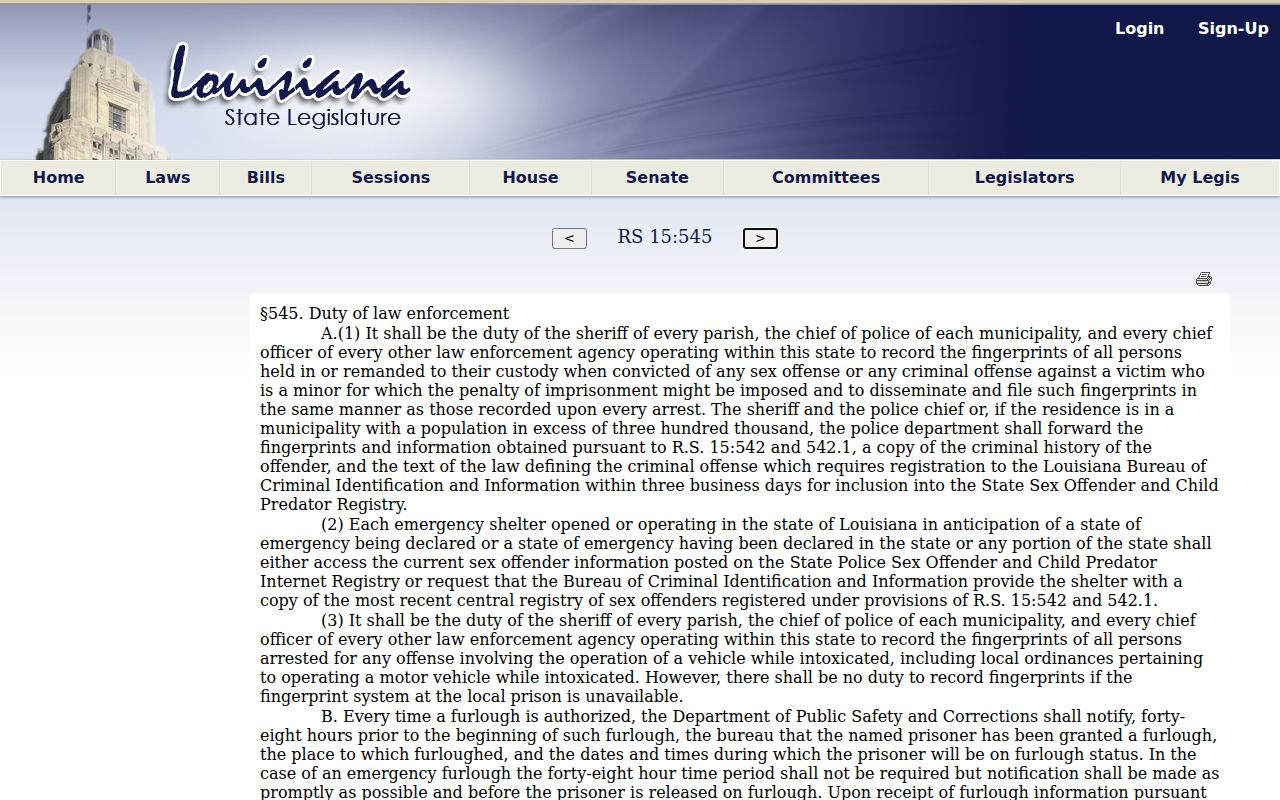
For Iberia registration appointments or site details, confirm the current procedure through IPSO rather than assuming the public search portal is the registration counter.
Local collection and state publication are distinct tasks. A sheriff or police chief takes and forwards required information; BCII runs the statewide public system. A correction may therefore need both local verification and a Registry contact instead of a direct edit by the searcher.
The three-business-day forwarding duty concerns the agency's transmission of registration information, criminal history, and the text of the applicable offense law. It should not be read as a promise that every public-facing field changes within the same period. Searchers should note the displayed verification date, contact LSP about a correction, and ask IPSO to confirm the current local registration procedure.
Louisiana Registration Tiers and Terms
Louisiana tiers are statutory categories tied to qualifying offenses, duration, and verification frequency, not a generic prediction or risk score. Tier I ordinarily carries 15 years, Tier II 25 years, and Tier III lifetime registration. Limited relief under R.S. 15:544 may apply in defined circumstances, but reduction is not automatic.
Annual, semiannual, and quarterly verification describe how often the registrant reports under the tier framework. They do not show how recently every public field synchronized across agencies. Read the verification date and status, then use the official correction chain if an entry appears inconsistent.
| Level / Tier | Duration | Verification Frequency |
|---|---|---|
| Tier I | 15 years | Annually |
| Tier II | 25 years | Semi-annually |
| Tier III | Lifetime | Quarterly |
Read the Louisiana Tier Rules
The LSP offenses and tier source explains which qualifying categories attach to the three terms and verification schedules.
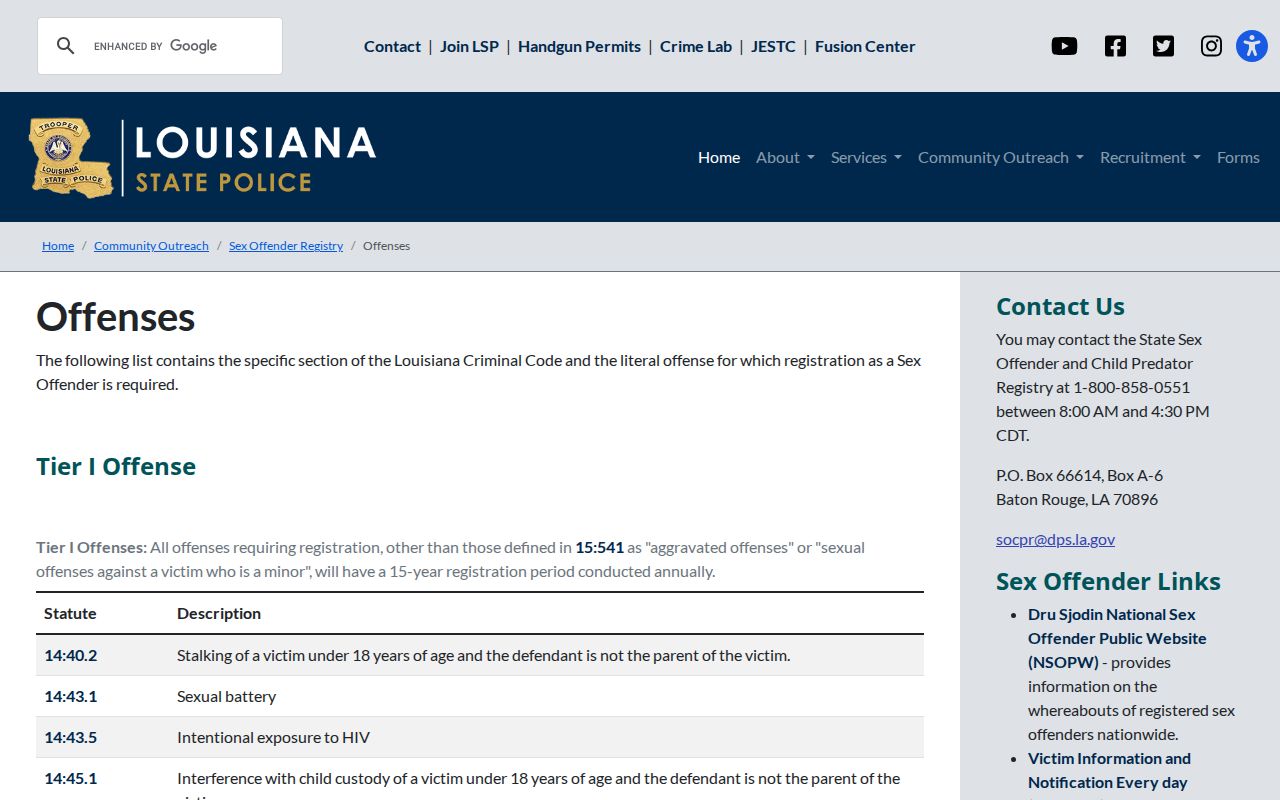
The official category should control over an informal label. The separate Louisiana duration statute is shown next.
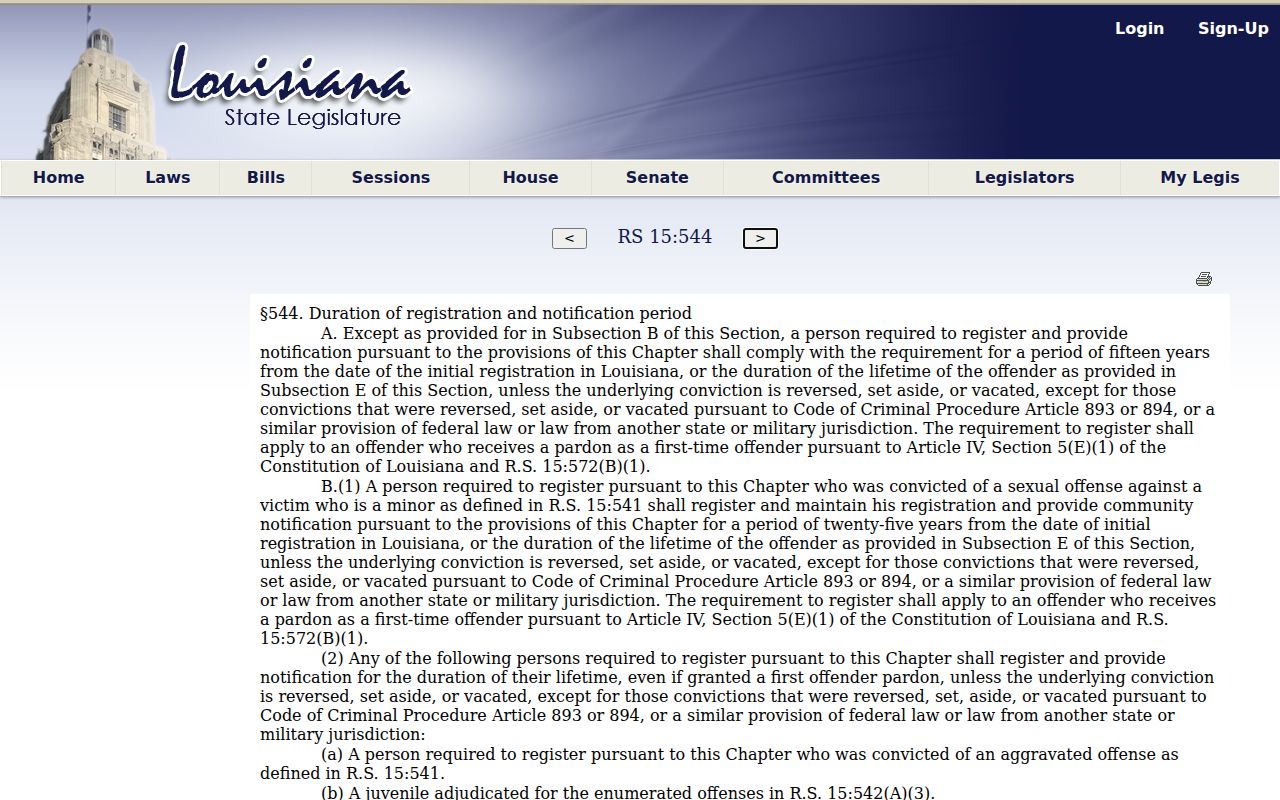
Together, these sources explain why a profile's tier, term, and verification frequency must be read as connected legal fields.
Tier I generally covers qualifying offenses outside the aggravated or minor-victim categories described by law. Tier II concerns covered offenses against a minor, and Tier III concerns aggravated offenses. These summaries do not replace the statute or profile. Limited reduction can require a clean record and treatment proof, and qualifying relief must follow the prescribed process.
Verify an Outdated Iberia Address
Do not confront a registrant or household. Note the official profile and the fact that appears inconsistent, then contact the LSP Registry at 1-800-858-0551 during its published 8:00 a.m.-4:30 p.m. Central hours or verify through local law enforcement. The registry's mailing contact is P.O. Box 66614, Box A-6, Baton Rouge, LA 70896.
LSP explicitly disclaims guaranteed timeliness because updates depend on courts, Corrections, and local agencies. A suspected discrepancy calls for official verification, not a public accusation.
Preserve the official URL, date checked, and a neutral description of the suspected error. Avoid circulating claims while it is reviewed. If a profile indicates noncompliance, report it through official law enforcement channels; do not attempt surveillance, confrontation, or independent enforcement.
A moved address can affect city, ZIP, parish, and radius results, while an alias can affect a name query. Run both search types before reporting an apparent omission. Give the Registry enough neutral detail to locate the listing without publishing extra personal information. If the question concerns a conviction date, sentence, or qualifying statute rather than current registration, the court that entered judgment may be the better document source.
Lawful Use and Community Notification
The registry supports personal, family, neighborhood, and community awareness. Searchers should use official profiles to plan safety and route corrections to LSP or the registering agency. Louisiana's public-record definition supports lawful access but does not erase separate restrictions on harassment or misuse.
Community awareness should remain factual and restrained. Share the official registry link instead of rewriting profile claims, and direct urgent safety concerns to law enforcement. Published information does not authorize private investigation or consequences.
The Louisiana public-record definition appears below.
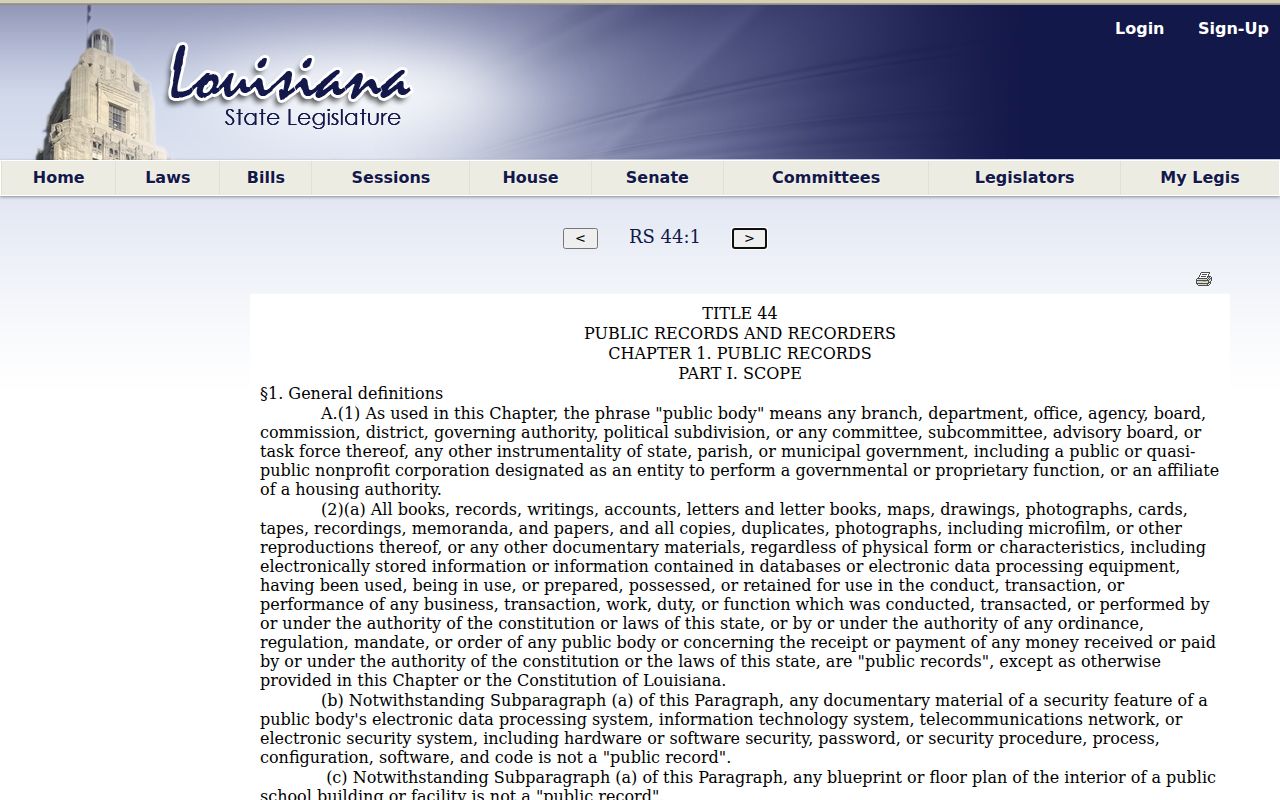
Public availability does not authorize intimidation, threats, harassment, or vigilantism.
Use Registry Information Lawfully: Louisiana State Police warns that threatening, intimidating, or harassing a registrant or family member, or otherwise misusing registry information, may lead to criminal prosecution or civil liability. Use the information for lawful awareness and verification only.